
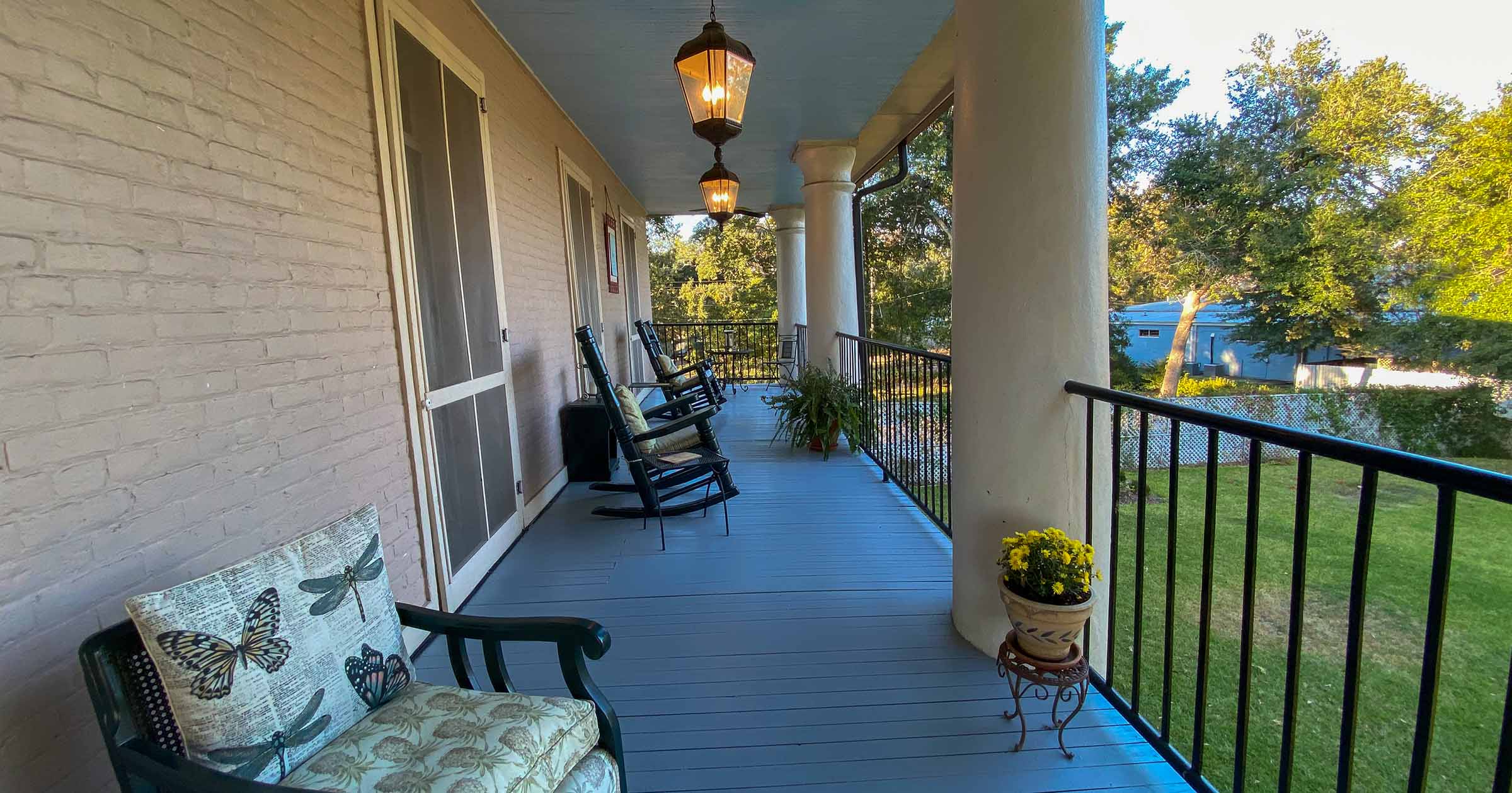
The History of Haint Blue: Why It’s Used for Porch Ceilings
Roxanne Ecklund
[vc_row][vc_column][vc_column_text css=””]If you’ve ever walked through neighborhoods in the South, especially in places like Georgia or South Carolina, you might have noticed something interesting about many porches—they have light blue ceilings. We get asked this question often so we thought we would take some time to explain. This color, known as Haint Blue, has a deep history and is more than just a design choice. But why is it called Haint Blue, and why do people use this color for their porches?
What Does “Haint” Mean?
The word “haint” comes from the Gullah culture, an African American community in the coastal areas of the Southeastern U.S. “Haints” are restless spirits or ghosts believed to cause harm. According to folklore, these spirits cannot cross water. The light blue color is said to look like water, so people started painting their porch ceilings blue to trick the spirits into staying away. This tradition has been passed down through generations and is still seen today in many homes.
Why Is Blue Used on Porches?
Besides the spiritual reasons, there are other practical reasons why blue is used for porches. Here are a few:
- Keeps Bugs Away: Some believe that haint blue can help keep bugs like wasps and spiders from building nests. While not scientifically proven, many homeowners say they see fewer pests when their porch ceiling is painted blue.
- A Cooling Effect: The color blue is calming and can make a space feel cooler. This was especially important in the South, where summers can be very hot. Blue ceilings can make the porch a more relaxing place to sit and enjoy the breeze.
- Beautiful Aesthetic: Simply put, Haint Blue looks great! The soft, soothing color complements the natural surroundings and gives homes a welcoming feel.
10 Haint Blue Color Options from Popular Paint Brands
If you’re thinking of adding a touch of Haint Blue to your porch, here are some popular shades from well-known paint manufacturers:
- Sherwin-Williams – “Sleepy Blue” (SW 6225) o A soft, pale blue with a calming effect.
- Sherwin-Williams – “Atmospheric” (SW 6505) o A slightly brighter option that brings a fresh, airy feel.
- Benjamin Moore – “Palladian Blue” (HC-144) o A light blue-green that works well for porches and other outdoor spaces.
- Benjamin Moore – “Woodlawn Blue” (HC-147) o A more muted blue that pairs beautifully with white trim.
- Farrow & Ball – “Light Blue” (No. 22) o A traditional blue-gray shade, perfect for a historic look.
- Behr – “Hazy Skies” (PPU25-09) o A soft, sky blue with subtle undertones.
- Valspar – “Summer Blue” (5001-7B) o A cheerful, bright blue that stands out on any porch.
- Sherwin-Williams – “Blue Horizon” (SW 6497) o A gentle blue that gives a fresh look to porch ceilings.
- Benjamin Moore – “Iceberg” (2122-50) o A cool, crisp blue that feels like a breeze on a hot day.
- Farrow & Ball – “Borrowed Light” (No. 235) o A light, airy blue with just a hint of gray.
Bringing the Tradition Home
Whether you believe in the folklore or just love the look, painting your porch ceiling Haint Blue is a great way to honor tradition while adding charm to your home. The soft, calming shades can make your outdoor space feel more inviting and comfortable.
If you’re ready to give it a try, any of the colors listed above from top brands will give your porch a beautiful, timeless look.
Needing more design inspo? Click here to check out our gallery of homes.[/vc_column_text][/vc_column][/vc_row]