
Stucco Maintenance in Georgia: Paint or Ceramic Coating?
Roxanne Ecklund
[vc_row][vc_column][vc_column_text css=””]Stucco in Georgia: How to Maintain It—And Whether Paint or Ceramic Coating Is the Better Choice
Stucco is a classic, elegant finish that complements many homes across Georgia’s diverse neighborhoods—from Savannah’s historic districts to the modern suburbs of Atlanta. But Georgia’s climate can be unforgiving on stucco. Humidity, temperature swings, and heavy rains mean that regular maintenance isn’t just smart—it’s essential.
So what’s the best way to protect your stucco long term? Should you stick with traditional exterior paint, or upgrade to a more durable ceramic coating?
To get a professional take, we spoke with Matt Hoots, CEO of SawHorse Design & Build, a nationally recognized green builder known for his energy-efficient renovation expertise.
Georgia’s Climate Is Tough on Stucco
Stucco is porous by nature. It absorbs moisture, expands and contracts, and is vulnerable to cracking if not properly protected. That makes it especially susceptible in Georgia, where we deal with:
– High humidity almost year-round
– Heavy rainfall in spring and summer
– Rapid temperature shifts, especially in the fall and winter
– Mold and mildew growth, particularly on shaded walls
If your stucco isn’t sealed well, water can seep in behind the surface—leading to bubbling, peeling paint, and worse, damage to the underlying structure.
The Traditional Fix: Repainting Every 5–7 Years
Many homeowners turn to traditional latex-based paints to protect their stucco. But this solution has limits.
“Standard paints don’t breathe well and tend to trap moisture inside stucco walls,” says Matt Hoots. “That’s one of the most common causes of premature failure. Once moisture gets behind the surface, it can lead to peeling paint, efflorescence, and expensive repair work.”
Even so-called “elastomeric” paints can fail if the prep work isn’t meticulous or if the walls aren’t fully dry before painting. Most homes end up needing repainting every 5–7 years—and sometimes sooner if they face direct sun or heavy rain.
The Alternative: Ceramic Coating
Ceramic coatings offer a high-tech alternative that’s designed to last 25 years or more. They’re thicker than traditional paint and engineered to:
– Allow moisture vapor to escape (so stucco can breathe)
– Block UV rays and resist fading
– Prevent mold, mildew, and algae growth
– Reduce cracking due to expansion/contraction
“Ceramic coatings are especially effective on stucco because they combine durability with permeability,” says Hoots. “They let the wall dry out naturally while shielding it from new water intrusion. That’s the gold standard in a humid climate like Georgia.”
Key Maintenance Tips for Stucco Homes
Whether you opt for paint or ceramic coating, these best practices can help extend the life of your stucco:
– Inspect annually for hairline cracks, chalking, or peeling
– Clean regularly with low-pressure water and a soft brush
– Seal cracks early to prevent water infiltration
– Check gutters and downspouts to keep water away from walls
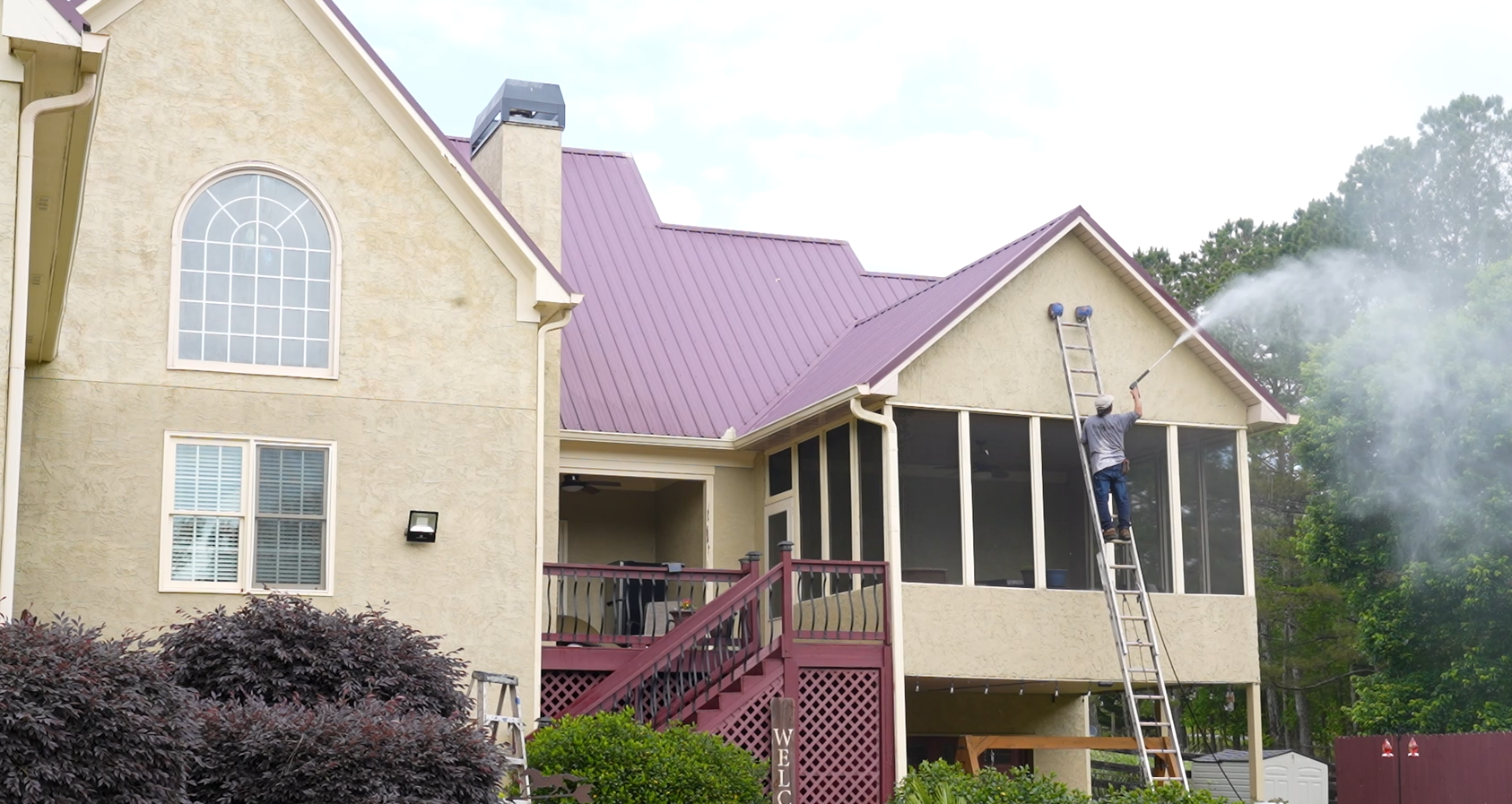
– Avoid harsh pressure washing, which can damage the surface
So Which Should You Choose?
If you’re planning to sell your home in a few years or just refreshed the exterior, traditional paint may be sufficient for the short term. But if you’re looking for long-term protection, less maintenance, and peace of mind, ceramic coating could be the smarter investment.
“Paint is cheaper upfront,” says Hoots, “but in Georgia’s climate, ceramic coatings often pay for themselves in the long run by reducing the need for repainting and repairs.”
Final Thoughts
Stucco brings timeless appeal to any Georgia home—but it also demands a thoughtful approach to protection. Whether you’re in Atlanta, Athens, or coastal Savannah, make sure your finish is built to last.
Want to learn more about Rhino Shield ceramic coatings for stucco homes? Click here to explore your options.[/vc_column_text][/vc_column][/vc_row]